Have you ever wondered if a travel adapter and a converter are the same? Many travelers assume they are interchangeable, but using the wrong one, such as a universal travel adapter instead of a voltage converter, could damage your devices.
In this article, we will clarify the key differences between a travel adapter and a voltage converter. You’ll learn when and how to use each one, ensuring your electronics stay safe and functional during your travels.
What Is a Travel Adapter and What Does It Do?
Function and Purpose of a Travel Adapter
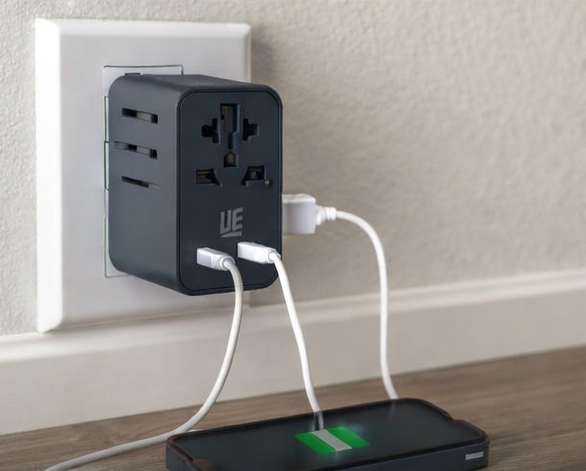
A travel adapter is a crucial tool for international travelers, enabling devices from one country to fit into the electrical outlets of another. Since different regions use various types of outlets and plug configurations, a travel adapter is necessary to bridge the gap. It changes the shape of your device's plug to match foreign sockets, but it does not change the voltage.
If voltage conversion is needed (for instance, when traveling to regions with different electrical standards), a voltage converter would be required in addition to the travel adapter. A travel adapter simply provides a physical connection, ensuring that your devices—like smartphones, laptops, or chargers—can safely plug into the power source of your destination country.

Common Types of Travel Adapters
The world uses different plug and socket types, making it essential to select the right adapter for your trip. Below are some of the most common plug types and their corresponding regions:
Common Types of Travel Adapters
Plug Type | Description | Popular Destinations |
Type A | Two flat parallel pins | United States, Canada, Mexico, Japan |
Type B | Two flat parallel pins + grounding pin | United States, Canada |
Type C | Two round pins | Europe, Middle East, Israel, Asia, South America |
Type G | Three rectangular pins | United Kingdom, Ireland, Malta, Malaysia, Singapore |
Type I | Three flat pins in triangular arrangement | Australia, New Zealand, China, Argentina |
Type E/F | Two round pins + grounding hole | France, Germany, Spain |
Key Considerations When Choosing a Travel Adapter
When selecting a travel adapter, consider the following:
● Compatibility: Ensure the adapter fits the plug type of the destination country.
● Device Requirements: Check if your device needs additional features like USB ports or surge protection.
● Safety Features: Some adapters come with built-in surge protection to guard against unexpected power surges.
What Is a Voltage Converter and What Does It Do?
Understanding Voltage Conversion
Voltage conversion is a critical aspect of using electronic devices across different countries. Electrical systems vary worldwide, with two primary voltage standards: 110V and 220V. For example, the United States operates on 110-120V, while many other regions like Europe, Asia, and Africa use 220-240V. These differences can cause damage to your devices if the voltage is not correctly managed.
A voltage converter adjusts the voltage from the wall outlet to match the voltage requirement of your device. For example, if you're traveling from a 110V country like the U.S. to a 220V country like Germany, and your device is designed for 110V, you’ll need a voltage converter to ensure safe use. This device ensures that the electrical current entering your device is at the correct voltage, preventing potential damage.

When to Use a Voltage Converter
Not all devices require a voltage converter. Many modern electronics such as smartphones, laptops, and tablets are dual-voltage, meaning they can handle a wide range of voltages (typically 100-240V) and don’t need a converter. However, certain appliances—especially those with motors or heating elements—are designed for a single voltage and require a converter for safe operation when traveling internationally.
Devices that typically require a voltage converter:
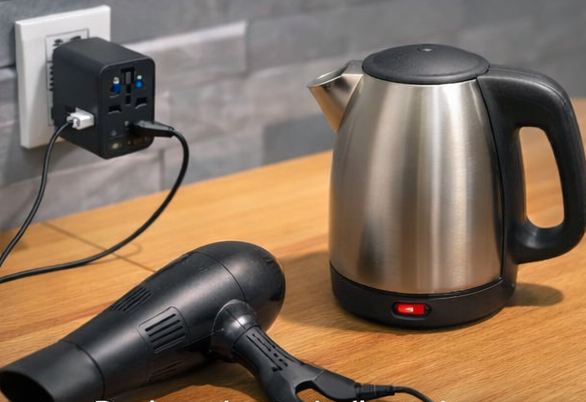
● Hair Dryers: Hairdryers often have high power requirements and are commonly made for either 110V or 220V. If you bring a 110V hair dryer to a 220V region, a converter is necessary.
● Coffee Makers: Like hairdryers, coffee makers are usually single-voltage appliances and will require a voltage converter to work safely in regions with a different voltage standard.
● Irons and Electric Kettles: These appliances use heating elements, and using them with the wrong voltage could cause malfunction or damage.
Before traveling, always check your device’s voltage specifications. If the device is labeled with a voltage range (like “100-240V”), it can be used in different regions without a converter. However, if it lists only a specific voltage (e.g., “120V”), a voltage converter is needed for use in regions with a different electrical standard.
Key Differences Between a Travel Adapter and a Voltage Converter
Physical Plug vs. Electrical Power
The main difference between a travel adapter and a voltage converter lies in their functions. A travel adapter changes the plug shape to fit foreign outlets but does not affect the voltage. For example, when traveling from the U.S. (Type A or B plugs) to the U.K. (Type G plugs), a travel adapter is required to connect your device to the U.K. power socket.
In contrast, a voltage converter adjusts the electrical voltage to match your device's needs. Countries around the world use different voltage standards (110V vs. 220V). If you're using a single-voltage device designed for 110V in a region that uses 220V, a voltage converter reduces the power to a safe level for your device.
When You Need Each One
Knowing when to use a travel adapter or a voltage converter depends on the type of device and the destination’s electrical system.
● Travel Adapter: If your device is dual-voltage (such as smartphones, laptops, or most modern chargers), you only need a travel adapter. Dual-voltage devices can safely handle both 110V and 220V systems, and the adapter is only required to change the plug shape.
● Voltage Converter: For single-voltage devices like hair dryers or coffee makers, a voltage converter is necessary if the destination has a different voltage system. For example, a 120V hair dryer from the U.S. would require a converter when traveling to a region with 220V power.
Risks of Using the Wrong Equipment
Consequences of Using the Wrong Adapter
Using the wrong travel adapter can lead to device malfunction or poor performance. While adapters change the physical shape of the plug to fit into foreign outlets, they don’t alter the voltage. If you use an adapter with a device that doesn’t support the local voltage, it could overheat or stop working entirely. For example, plugging a 110V device into a 220V socket can cause serious damage, even if the plug fits correctly.
Additionally, adapters cannot handle voltage mismatches. Devices designed for single-voltage systems could be damaged if plugged into a different voltage system, even if the adapter is properly used. While the risks are generally minor, they can lead to inconvenient issues, especially for smaller electronics like chargers or portable devices that are not built for international use.
Risks of Using a Voltage Converter Incorrectly
Using a voltage converter incorrectly poses significant risks. A voltage converter changes the electrical current (e.g., from 110V to 220V), and if the converter is not suitable for the device, it can lead to appliance damage, overheating, or worse, electrical fires. This is particularly true for high-power devices such as hair dryers, coffee makers, and irons, which require converters capable of handling higher wattages.
If the converter is mismatched with the device’s power rating, the device may burn out, or the converter may fail, leading to potential hazards. Always verify that the converter’s wattage capacity is compatible with the device’s needs to avoid these risks. High-power appliances like hair dryers and irons are especially vulnerable to incorrect voltage conversion, making it essential to choose the right converter.
How to Choose the Right Travel Adapter or Converter for Your Trip
Checking Your Devices for Compatibility
Before your trip, it's crucial to check if your devices are compatible with the voltage and plug types in your destination. To do this, examine your device’s power adapter or manual to determine the voltage it supports.
● Dual-Voltage Devices: Many modern electronics, like smartphones, laptops, and tablets, are dual-voltage and can handle both 110V and 220V. These devices only require a travel adapter to fit the plug type of the country you’re visiting.
● Single-Voltage Devices: Older or high-power devices, such as hair dryers and coffee makers, usually support a specific voltage (e.g., 120V). These devices will need a voltage converter in addition to a travel adapter to ensure they function safely in countries with different voltage standards.
Choosing Between a Travel Adapter and Converter
Once you've confirmed your device's voltage requirements, it’s time to decide whether you need a travel adapter or a voltage converter. Here’s a simple guide:
1. Dual-Voltage Devices:
a. What to use: Only a travel adapter is needed to connect to the local outlet. For example, when traveling to Europe from the U.S., your dual-voltage laptop will only require an adapter to fit the European socket.
2. Single-Voltage Devices:
a. What to use: A voltage converter and a travel adapter are required. The converter adjusts the voltage (e.g., from 220V to 110V), while the adapter ensures the plug fits into the local socket.
Examples of Devices and What to Use:
Device | Voltage Type | What You Need |
Smartphone/Tablet | Dual-voltage | Only a travel adapter |
Laptop | Dual-voltage | Only a travel adapter |
Hair Dryer | Single-voltage | Voltage converter and travel adapter |
Coffee Maker | Single-voltage | Voltage converter and travel adapter |
Conclusion
In this article, we explored the key differences between travel adapters and voltage converters. A travel adapter changes the plug shape, while a voltage converter adjusts the electrical voltage. Always check your devices’ compatibility before traveling to ensure they work safely.
For reliable travel adapters, UE Electronic offers high-quality solutions, ensuring secure and efficient charging for your devices. Their products provide global compatibility, fast charging, and convenience for international travelers.
FAQ
Q: What is the difference between a travel adapter and a voltage converter in industrial applications?
A: A travel adapter simply changes the plug shape to fit local outlets, while a voltage converter adjusts the electrical voltage. In industrial settings, choosing the correct equipment is essential for protecting devices and ensuring compatibility with local power systems.
Q: When should a travel adapter be used in a business environment?
A: A travel adapter should be used when dual-voltage equipment needs to be plugged into foreign outlets. It is necessary for devices like laptops or chargers, where the voltage is compatible but the plug configuration differs.
Q: Can using the wrong travel adapter impact equipment performance?
A: Yes, using an incorrect travel adapter may lead to malfunction, especially if the device is not dual-voltage or if the adapter does not securely fit the outlet, causing operational risks.
Q: What factors should be considered when selecting a travel adapter for international business operations?
A: When selecting a travel adapter, consider device voltage compatibility, plug type, safety features, and the adapter's ability to handle the required electrical load without risking damage.