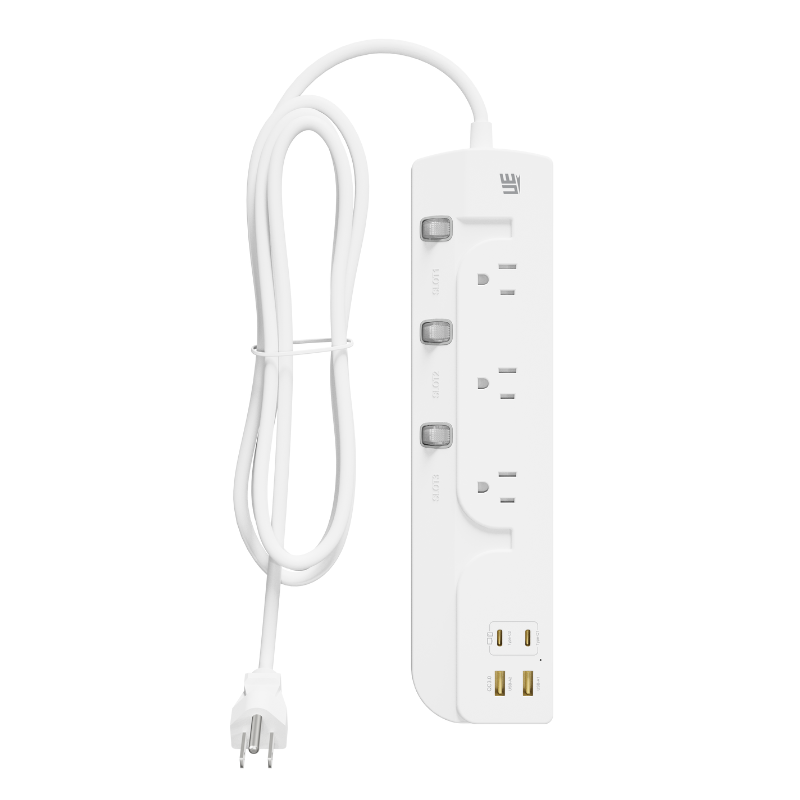
While extension sockets are ubiquitous in homes and offices, the internal mechanics that safely distribute high-voltage electricity are rarely understood until a failure occurs. Most users simply plug their devices in and expect perfect performance. However, power distribution remains an active, complex physical process. At the decision stage, choosing the right power distribution unit requires looking beyond the sheer number of available outlets. It requires understanding the underlying circuitry, material quality, and safety thresholds. Poor hardware choices can escalate rapidly into dangerous electrical faults. This guide explains exactly how an extension socket operates and breaks down its internal components. We provide an evidence-based framework for evaluating standard and advanced models for your infrastructure. You will learn to navigate load capacities, identify premium materials, and mitigate common fire risks effectively. By the end, you will be equipped to make safer, smarter procurement choices.
Key Takeaways
An extension socket operates on a parallel circuit design, ensuring that each connected device receives the same standardized voltage regardless of how many items are plugged in.
Internal build quality—specifically the thickness of the copper busbars and the wire gauge (AWG)—dictates the maximum safe load capacity and prevents overheating.
A standard extension socket merely extends reach, whereas advanced models integrate Metal Oxide Varistors (MOVs) for surge protection and internal transformers for USB power delivery.
Selecting the right unit requires matching the socket's amperage rating and safety certifications (UL/CE/ETL) to your specific hardware requirements and environmental risks.
How the Core Circuitry Distributes Power
The Parallel Circuit Framework
Electrical devices require a stable voltage to function correctly. To deliver this, internal wiring uses parallel rather than series circuits. Think of older holiday lights. When one bulb burns out on a series circuit, the entire string goes dark. The circuit breaks completely. Modern power strips prevent this issue entirely through parallel routing. This design maintains a consistent 120V or 240V across all receptacles simultaneously. If you unplug a desk lamp, the circuit remains unbroken for your computer monitor. The parallel framework ensures they operate independently while drawing power from the same centralized source.
The Three-Pronged Architecture
Modern electrical distribution relies on a specific three-wire architecture. This standardized system ensures optimal performance and maximum user safety.
Live (Hot) Wire: This wire delivers the alternating current directly from your main electrical panel. It serves as the primary gateway for incoming energy.
Neutral Wire: Electricity must flow in a complete loop. The neutral wire returns the depleted current back to the panel, completing the necessary circuit.
Ground Wire: This is a critical safety failsafe. If insulation fails and electricity touches the metal casing of an appliance, the ground wire directs this stray voltage safely into the earth. It protects users from fatal shocks and prevents catastrophic short circuits.
Internal Busbars
Beneath the plastic housing, you will find internal busbars. These are single, continuous strips of conductive metal. They act as the physical connection points for your plug prongs. Manufacturers ideally forge them from phosphor bronze or high-grade copper. High-quality metals easily carry electrical current. Cheaper models often use thin brass strips instead. Thin brass creates significant electrical resistance. Resistance generates unwanted heat. Excessive heat generation degrades internal plastics over time, eventually leading to electrical fires. Thick copper busbars represent a non-negotiable feature for safe, long-term power distribution.
Solution Categories: Anatomy of Different Sockets
The Standard Extension Socket
Some users just need to reach a distant wall outlet. A standard extension socket focuses on pure power distribution. It essentially acts as a dumb pipe for electricity. These basic units lack voltage regulation or advanced filtering. They strictly suit low-risk, unpowered environments. You should only use them for extending reach to standard appliances like reading lamps or basic fans. Because they offer no active defense mechanisms, they leave connected hardware completely vulnerable to external grid fluctuations.
Surge-Protected Sockets
Sensitive electronics require active defense against voltage spikes. Surge protectors provide this defense using Metal Oxide Varistors (MOVs). MOVs bridge the gap between the live wire and the ground wire. Under normal conditions, they do nothing. However, when voltage exceeds a specific threshold, they spring into action. They act exactly like a pressure relief valve in a plumbing system. They absorb the excess voltage and safely dump it into the ground wire. Unfortunately, MOVs degrade slightly with every spike they absorb. They eventually deplete their absorption capacity entirely. This degradation necessitates regular replacement of the entire unit to maintain active protection.
The USB Extension Socket
Modern desks demand a mix of alternating current (AC) and direct current (DC). A hybrid USB extension socket solves this dilemma. These units house an internal AC-to-DC converter, commonly known as a transformer. They pull 120V or 240V AC and step it down to the 5V, 9V, or 12V DC needed by mobile devices. Modern iterations go a step further. They integrate smart IC chips into the circuit board. These chips actively communicate with your smartphone or tablet. They negotiate the exact wattage required by the connected battery. This prevents overcharging, mitigates dangerous heat buildup, and extends the overall lifespan of your mobile hardware.
Solution Comparison Chart
Socket Type
Primary Function
Internal Components
Best Use Case
Standard Model
Extends reach and multiplies basic outlets.
Copper busbars, basic wiring.
Lamps, fans, non-sensitive hardware.
Surge Protector
Defends against sudden grid voltage spikes.
MOVs, EMI/RFI noise filters.
Televisions, desktop PCs, home theaters.
Hybrid USB Model
Delivers both AC and DC power simultaneously.
Transformers, Smart IC charging chips.
Workstations, bedside tables, travel bags.
Key Evaluation Dimensions for Procurement
Wire Gauge (AWG) and Amperage Constraints
Understanding capacity requires evaluating the American Wire Gauge (AWG) standard. The AWG number indicates the thickness of the internal copper wire. Interestingly, a lower AWG number indicates a substantially thicker wire. Thick wires carry more current without overheating. This thickness remains mandatory for high-draw appliances like space heaters, microwave ovens, or server racks. Conversely, thinner wires meant for low-draw devices carry higher AWG numbers.
AWG Rating
Wire Thickness
Maximum Amperage
Recommended Applications
16 AWG
Thin (Light Duty)
10 to 13 Amps
Clocks, small lamps, phone chargers.
14 AWG
Medium (Standard)
15 Amps
Computers, monitors, standard hand tools.
12 AWG
Thick (Heavy Duty)
20 Amps
Space heaters, air conditioners, compressors.
Housing and Insulation Materials
The external shell matters just as much as the internal copper. Cheap models rely heavily on standard PVC plastics. PVC becomes brittle over time and melts quickly under localized heat. Premium units utilize fire-retardant polycarbonate (PC) shells instead. Polycarbonate withstands immense heat without melting or combusting. If an internal short circuit produces a spark, a PC housing self-extinguishes the flame. It physically prevents the fire from spreading to your carpets or drywall. You must prioritize housing materials capable of surviving worst-case electrical failures.
Compliance and Safety Certifications
Marketing claims hold very little weight when discussing electrical safety. You must establish a baseline for trustworthiness through independent laboratory testing. Look closely at the back of the unit. You should verify independent testing marks like UL (Underwriters Laboratories), ETL, or CE. These laboratories subject the devices to brutal testing conditions. They test for dielectric withstand capabilities, monitor temperature rise under maximum load, and evaluate physical crush resistance. Buyers must verify these independent testing marks rather than relying blindly on manufacturer packaging claims.
Common Implementation Risks & Fire Safety Compliance
The Danger of Daisy-Chaining
Connecting multiple power strips together creates a massive safety hazard. Industry professionals call this practice daisy-chaining. This setup alters the physics of electrical resistance. Each connection point adds resistance to the flow of current. When multiple units link together, this resistance compounds rapidly. It circumvents the primary circuit breaker's ability to accurately read the load. The first strip in the chain ends up pulling significantly more current than it can handle. This leads to rapid overheating. The internal insulation melts, ultimately causing devastating electrical fires behind desks or under furniture.
Overloading the Current Rating
Every electrical circuit obeys strict mathematical limits. Standard residential and commercial outlets typically supply a maximum of 15 amps. You must calculate the load capacity of everything you plug in. For example, a typical space heater draws 12.5 amps continuously. A small microwave draws roughly 8 amps. Running a space heater and a microwave simultaneously on a single socket demands 20.5 amps. This exceeds the safe operational limits by a massive margin. The internal busbars will overheat long before the main breaker realizes the danger. You must always calculate total wattage to prevent catastrophic overloading.
Environmental Degradation
Electricity and environmental moisture create a deadly combination. Standard models utilize indoor-rated housings. They offer zero protection against dust ingress or water droplets. Taking an indoor-rated unit outside for yard work introduces severe risks. Morning dew or light rain will quickly bridge the gap between the live and neutral prongs. This causes an immediate short circuit. You must address the risks of using indoor-rated gear in high-moisture environments. Always demand weatherproof, IP-rated housings for specific outdoor or industrial use cases.
Shortlisting Logic: Selecting the Right Socket for Your Setup
For Sensitive Electronics (PCs, Home Theaters)
Entertainment centers and computer setups require specialized defense. A sudden grid surge can destroy a thousand-dollar graphics card instantly. For these environments, prioritize units featuring high-Joule surge protection. A higher Joule rating means the internal MOVs can absorb larger electrical hits before failing. Furthermore, look for models offering EMI/RFI noise filtering. Dirty power from the grid introduces audio buzz into speakers and visual artifacts onto screens. Noise filtering smooths out the alternating current sine wave, ensuring pristine performance for your sensitive media hardware.
For High-Capacity Appliances (Kitchens, Workshops)
Garages, workshops, and kitchens present completely different challenges. Saws, compressors, and blenders demand massive spikes of current when their motors first spin up. A cheap plastic strip will melt under this strain. You must mandate a heavy-duty unit. Select products built with robust 12 to 14 AWG internal wiring. Additionally, ensure they feature a built-in 15-amp circuit breaker switch. This local breaker will trip and cut power immediately if a tool jams or attempts to draw too much amperage, protecting both the tool and the wiring.
For Desktops and Workstations
Modern office desks quickly become cluttered with bulky power adapters. To optimize a modern workstation, follow these steps:
Count your traditional AC requirements (usually just a monitor and a laptop brick).
Count your DC requirements (phones, tablets, wireless headphones).
Consolidate messy power adapters by plugging mobile devices directly into the USB outputs.
This approach cleanly routes safely distributed AC power to your primary peripherals while simultaneously delivering optimized DC power to your communication devices.
Conclusion
Understanding how an extension socket works reveals that it is not just a passive cable. It serves as an active, critical component of your daily electrical infrastructure. We have explored the underlying parallel circuits, evaluated the necessity of thick copper busbars, and highlighted the differences between basic models and advanced smart units. Never compromise on foundational safety metrics like proper wire gauge, dedicated grounding wires, and certified fire-retardant housing materials. Moving forward, you should audit your current power distribution setup. Discard any uncertified or physically degraded units immediately. Upgrade your workspace to application-specific sockets that match your actual daily load requirements.
FAQ
Q: What is the difference between an extension socket and a power strip?
A: These terms are often used interchangeably, but a distinct difference exists. A basic power strip simply multiplies available outlets, offering zero defense against grid fluctuations. Conversely, a true surge-protected model actively defends connected hardware against sudden voltage spikes using internal components like varistors.
Q: How do I know if an extension socket is overloaded?
A: Physical warning signs include the plastic casing feeling unusually warm to the touch or emitting a burning chemical smell. You might also experience frequent tripping of the unit's internal breaker or your home's main panel breaker. Always calculate the total wattage of plugged-in devices to ensure they stay below the rated maximum limit.
Q: Do the USB ports on a USB extension socket share power?
A: Yes, they typically share the total available output. If a unit offers a 3.1A total output, connecting one phone lets it draw maximum power. If you connect three devices simultaneously, the internal controller splits that 3.1A among them. This division naturally reduces the charging speed for each connected device.
UE Electronic is a power supplier integrating R&D, production and sales. We maintain a leading level in extension cord and GaN charger.We are committed to becoming a global power supplier.