Many people assume all power strips and electrical cords are created equal. You might grab the cheapest option off a hardware store shelf and plug everything in blindly. This common misconception carries serious real-world risks for your family. Choosing the wrong unit can lead to overheating wires and frequently tripped circuit breakers. It might even void your expensive appliance warranties or spark devastating house fires. Understanding electrical loads matters heavily for residential safety.
A successful purchase guarantees device safety and spatial efficiency in your rooms. It ensures adequate power delivery without overwhelming your home circuitry. It also guarantees strict compliance with residential safety standards. By assessing your specific household needs, you protect your electronics effectively. You will learn exactly how to match the right power solutions to your daily routine. We will guide you through understanding wire gauges, safety ratings, and surge protection.
Key Takeaways
Wire gauge (AWG) and amperage ratings dictate what appliances an extension socket can safely power; never undersize for high-draw devices.
A standard extension socket merely distributes power, while surge-protected variants actively defend sensitive electronics from voltage spikes.
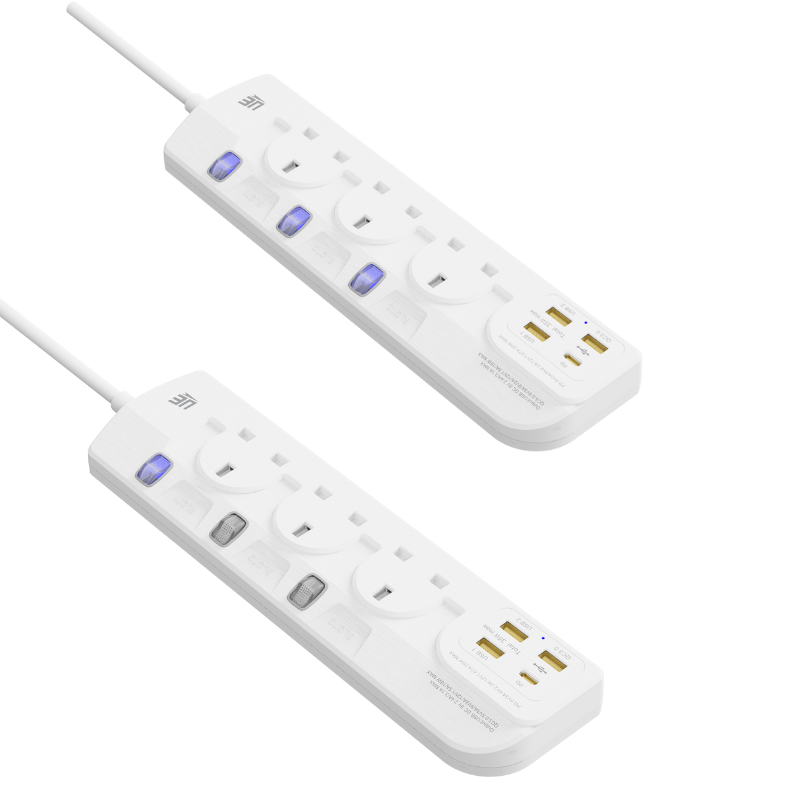
Modern setups benefit from hybrid designs, such as a USB extension socket, which eliminates bulky adapters without sacrificing standard AC outlets.
Always verify independent safety testing (UL, ETL, or equivalent) before purchasing.
Standard Extension Socket vs. Surge Protector: Defining Your Baseline Need
You must understand the technical distinction between basic power distribution and actual equipment protection. A standard extension socket simply gives you extra reach. It provides more outlets for your room. However, it offers absolutely zero protection against power spikes. Voltage fluctuations can easily travel through these basic cords directly into your plugged-in devices.
You should use a basic socket for low-risk, non-sensitive applications. Floor lamps, basic pedestal fans, and seasonal holiday lighting rarely need complex surge protection. These items do not contain intricate microprocessors. If a minor power surge hits, the damage risk for these basic items remains incredibly low.
Conversely, you must upgrade to surge protection for high-value electronics. Desktop computers, home theater systems, and smart TVs require active defense mechanisms. Surge protectors divert excess voltage into the ground wire safely. This vital action saves sensitive internal components from instantly frying during a thunderstorm or sudden grid fluctuation.
When evaluating surge protectors, always check the Joule rating on the box. This specific number indicates how much electrical energy the device can absorb before failing. For home offices and gaming setups, look for a minimum rating of 1,000+ Joules. Higher Joule ratings consistently mean better, longer-lasting defense for your gear.
Evaluating Power Capacity: Wire Gauge (AWG) and Amperage Rules
Understanding power capacity keeps your home completely safe from electrical fires. The American Wire Gauge (AWG) standard measures the actual wire thickness inside the cord. AWG uses an inverse relationship. A lower number means a thicker wire. Thicker wires safely carry a much higher electrical capacity.
Let's break down the three main operational categories. Light-duty cords typically use 16-gauge wire. They handle about 10 to 13 amps safely. These thinner cords are best for bedside phone chargers, internet routers, and small electronics. They offer great flexibility but limited power output.
Medium-duty cords use 14-gauge wire. They safely carry 14 to 15 amps consistently. You should use this thickness as the standard baseline for general living room use. It perfectly supports entertainment centers and multiple standard devices simultaneously without overheating.
Heavy-duty cords utilize thick 12-gauge wire. They support 15 to 20 amps. You absolutely require this robust rating for major kitchen appliances, portable space heaters, or garage power tools. These cords resist heat buildup effectively during intense electrical draws.
A major implementation risk involves plugging high-draw appliances into light-duty sockets. Never plug microwaves, large refrigerators, or window air conditioners into a thin 16-gauge cord. The wire will rapidly overheat. The internal plastic insulation will melt, creating an immediate and severe fire hazard in your home.
AWG Power Capacity Guide
Wire Gauge (AWG)
Amperage Rating
Best Household Uses
16-Gauge (Light-Duty)
10 - 13 Amps
Bedside chargers, routers, small lamps
14-Gauge (Medium-Duty)
14 - 15 Amps
Living room electronics, entertainment centers
12-Gauge (Heavy-Duty)
15 - 20 Amps
Kitchen appliances, space heaters, power tools
Room-by-Room Evaluation: Matching Features to Household Scenarios
Every room in your house presents unique electrical demands. A single, one-size-fits-all approach often fails. You need specific features tailored to different residential environments to maximize safety and utility.
For the home office or entertainment setup, focus heavily on spatial layout. You will likely encounter bulky AC adapters and oversized power bricks. We highly recommend models featuring wide-spaced outlets. These prevent a single large adapter from blocking adjacent slots. Additionally, right-angle flat plugs are incredibly useful. They allow your desks and bookshelves to sit flush against the wall without aggressively bending the cord.
The bedroom and nightstand areas require convenience and subtlety. You want to streamline messy charging cables immediately. Using a USB extension socket makes a massive difference here. Look for hybrid models featuring both standard Type-A and Power Delivery (PD) Type-C ports. These eliminate bulky charging blocks entirely. Also, note the brightness of any indicator lights. Bright LEDs can easily disrupt sleep. Choose units offering dimmable or fully disabled light features.
Kitchens and utility rooms handle intense electrical loads daily. You must emphasize heavy-duty capacity in these spaces. Use short, robust cords to minimize tripping hazards near counters. Look for sturdy outer casings and integrated circuit breakers. These breakers trip automatically if a toaster and a blender overload the circuit together, preventing wire damage.
Garages and patios expose electrical cords to harsh environmental conditions. You must differentiate between indoor and outdoor-rated models. Outdoor sockets use weather-resistant vinyl jackets. They protect the internal wiring from moisture, UV rays, and extreme temperature fluctuations. Never use a standard indoor cord for your patio lighting or electric lawn equipment.
Structural Quality and Non-Negotiable Safety Certifications
You must never compromise on structural quality or safety certifications. Cheap knockoffs constantly flood online marketplaces. They often look identical to premium brands but lack vital internal safeguards. Poor construction invites disastrous electrical failures.
Legitimate verification standards are entirely non-negotiable. Always check for genuine safety marks before buying. Look for the UL (Underwriters Laboratories) or ETL logo on both the physical product and the packaging. These independent testing labs verify the product handles its advertised electrical load safely. Beware of fake certification stickers. A genuine listing confirms the device passed rigorous thermal and electrical stress tests.
Material construction dictates the lifespan and overall safety of the unit. You should prioritize fire-retardant polycarbonate shells. Look specifically for a V0 flame retardant rating. This ensures the plastic casing will self-extinguish quickly if an internal short occurs. Internally, demand pure copper wiring. Some cheap brands use copper-clad aluminum (CCA) to cut manufacturing costs. CCA heats up much faster and carries a higher resistance, making it unsafe for heavy loads.
Modern failsafes protect your home from daily electrical accidents. Evaluate the presence of built-in overload protection switches. These instantly cut power when the amp draw exceeds safe, predefined limits. Child-safety shutters are vital if you have toddlers exploring the house. They prevent foreign objects from entering the live electrical terminals. Finally, grounded indicator lights confirm your home's wall outlet is properly wired. An ungrounded circuit renders any surge protection completely useless.
Common Pitfalls and Next-Step Actions for Buyers
Even a high-quality product introduces severe risks if used improperly. We often see buyers make dangerous mistakes during installation. Avoiding these common pitfalls ensures your electronics remain safe long after the purchase.
The most critical warning involves "daisy-chaining." This means plugging one extension socket directly into another to gain more reach. You must never do this. Daisy-chaining blatantly violates OSHA regulations and standard residential fire codes. It overloads the internal resistance of the first cord in the chain. This creates a severe fire risk hidden out of sight.
The cord length trap also catches many unsuspecting consumers. We advise buying the exact length needed for the job. Excess coiled cord creates massive thermal buildup. The tightly wound wire acts like an active heating element under heavy loads. Conversely, overly stretched cords create physical trip hazards. They also put mechanical stress on the plug, potentially exposing dangerous live wires.
To simplify your purchase, follow this logical three-step shortlisting checklist:
Identify the highest-draw appliance on your intended circuit. Check the manufacturer's wattage label on your device.
Choose the corresponding AWG and amperage. Ensure the cord's maximum rating exceeds your appliance's highest possible draw.
Select the appropriate form factor. Decide if you need a flat plug, integrated USB charging ports, or a specific cord length to fit your room's layout.
Conclusion
Choosing an electrical socket remains a safety decision first and a convenience decision second. You must always respect the true electrical demands of your household appliances. Undersizing a cord to save money frequently leads to overheating and equipment failure.
Investing a few extra dollars in the correct wire gauge prevents catastrophic damage. It protects your home infrastructure entirely. It also saves your expensive electronics from sudden grid spikes. A legitimate safety certification gives you absolute peace of mind. By assessing your needs room by room, you optimize both safety and organization. Stop buying the cheapest option available. Evaluate the amps, check the certifications, and plug your devices in safely.
FAQ
Q: Can I plug a space heater into an extension socket?
A: Generally no, unless it is specifically rated for heavy-duty 15A/1875W loads and has a thick 12-AWG or 14-AWG cord.
Q: Does a USB extension socket charge devices as fast as a wall block?
A: It depends on the port specs. Look for "Power Delivery" (PD) or specific wattage outputs like 20W/30W for fast charging.
Q: How long do extension sockets last?
A: Standard sockets last years if physically undamaged, but the internal MOVs in surge-protected models degrade over time and typically need replacing every 3-5 years.
UE Electronic is a power supplier integrating R&D, production and sales. We maintain a leading level in extension cord and GaN charger.We are committed to becoming a global power supplier.