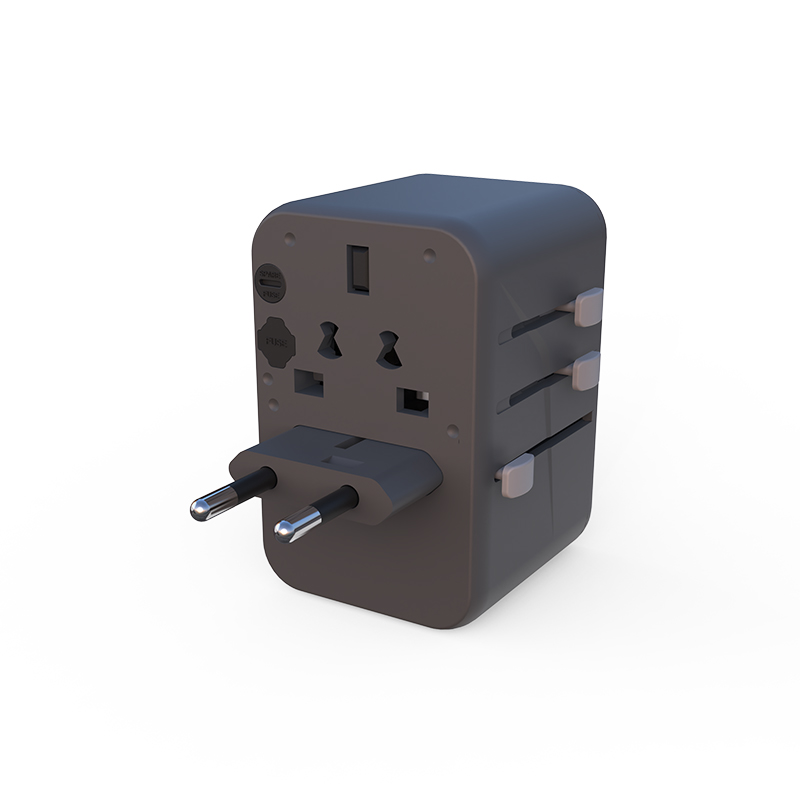
Traveling internationally can be confusing, especially when it comes to electronics. Many people wonder: is a travel adapter the same as a converter? Understanding the difference is crucial for keeping your devices safe and functional abroad.
In this article, we’ll clarify the key distinctions between a travel adapter and a converter. You’ll learn when to use each and avoid costly mistakes while traveling.
What Is a Travel Adapter?
Definition and Purpose
A travel adapter is a simple device that allows electronic devices to plug into different outlet types. Since outlets vary from country to country, the shape and size of plugs don’t always match. A travel adapter adapts the plug of your device to fit the foreign outlet, ensuring you can use your electronics abroad without any issues.
It’s important to note that a travel adapter does not change the electrical voltage, it only alters the shape of the plug to fit the socket. This is why it's needed when traveling to countries that use different plug shapes. Without the right adapter, you might find it impossible to charge your devices or use appliances.
Common Use Cases for Travel Adapters
Travel adapters are most commonly used with devices that travelers frequently take on international trips. These include:
● Phones: Modern smartphones typically support dual voltage, making them ideal candidates for travel adapters.
● Laptops: Most laptops are designed to work with various voltage levels, but they require the correct adapter to fit into the outlets.
● Tablets: Like phones, tablets usually feature dual-voltage support, so a travel adapter is the only thing needed to charge them abroad.
Travel adapters are especially useful for devices that are dual-voltage, meaning they can handle different electrical voltages (e.g., 100-240V). These types of devices don’t need a converter, just an adapter. In contrast, single-voltage devices would require both an adapter and a voltage converter.
Types of Travel Adapters
There are several types of travel adapters, each serving different needs:
Type of Adapter | Description | Common Use |
Plug Adapters | The most basic type, changing plug shapes to fit foreign outlets. | For specific plug shapes (e.g., UK to US). |
USB Adapters | Adapters with USB ports to charge devices without needing separate plugs. | Perfect for charging phones, cameras, etc. |
Universal Adapters | Multi-functional adapters that work in most countries, offering a variety of plug configurations. | Ideal for travelers visiting multiple countries. |
When traveling, the type of adapter you need depends on the country you're visiting. For example, countries like the United Kingdom and Ireland require a type G adapter, while European countries like France and Germany use type C, E, or F adapters. A universal adapter can work in several countries, making it an excellent choice for frequent travelers.
Knowing which type of adapter to bring is key. For instance, if you’re traveling to a country with multiple plug types, a universal adapter can cover all your needs. However, if you're only going to one destination, a specific adapter type might be all you need.
Key Differences Between a Travel Adapter and a Converter
Function Comparison
The main distinction between a travel adapter and a voltage converter lies in their functions. A travel adapter changes the physical plug shape to fit foreign outlets. It does not alter the electrical current, meaning it’s used when your device can handle the local voltage. For example, when traveling from the U.S. to Europe, a travel adapter allows you to plug your American charger into European outlets, but it doesn’t adjust the voltage.
In contrast, a voltage converter adjusts the electrical current to match the voltage requirements of your device. If you're traveling to a country with a higher or lower voltage than your device supports, a voltage converter steps up or steps down the voltage. For example, if you bring a U.S. single-voltage hair dryer (110V) to Europe (220V), a converter is necessary to prevent your hair dryer from being damaged by the higher voltage.
When to Use Each Item
Choosing between a travel adapter and a voltage converter depends on the voltage compatibility of your device. If your device is dual-voltage (e.g., 100-240V), like most modern phones, laptops, and tablets, you only need a travel adapter. These devices can adjust to different voltage levels without damage. Simply use the appropriate adapter to fit the plug into the foreign outlet.
However, if your device is single-voltage (e.g., 110V only), like older hair dryers or irons, you’ll need a voltage converter in addition to the adapter. These devices cannot handle the higher or lower voltage found in different countries, and using them without a converter could cause severe damage.
Practical Travel Tips:
● Dual-Voltage Devices: Only a travel adapter is needed.
● Single-Voltage Devices: A voltage converter is required along with the travel adapter.
Safety and Compatibility Concerns
Using the wrong device for your appliances can lead to safety risks such as overheating, device damage, or even fires. It’s crucial to check the voltage rating on your devices before traveling. Most devices have a label near the power cord or on the adapter itself, showing the input voltage range (e.g., "100-240V"). If your device is labeled as dual-voltage, a travel adapter is sufficient.
If you attempt to use a device that requires a voltage converter without one, the device could be damaged by the wrong electrical current. This is especially common with single-voltage hair dryers or irons, which could overheat or burn out when used with a higher voltage than they are designed for.
Device Type | Voltage Requirement | Need a Converter? |
Dual-Voltage Devices | 100-240V | No |
Single-Voltage Devices | 110V or 220V | Yes |
Phones and Laptops | 100-240V | No |
Hair Dryers and Irons | 110V or 220V | Yes |
Before you travel, make sure you are clear about the voltage compatibility of your devices. Double-check your travel accessories to avoid any mishaps, and choose the correct adapter or converter based on the voltage your device requires.

Dual Voltage Devices: Do You Need an Adapter or Converter?
What Are Dual Voltage Devices?
Dual voltage devices are designed to operate on more than one electrical system, meaning they can work with different voltage levels. These devices are built to accept a wide range of voltages, typically from 100V to 240V, allowing them to be used in many countries without needing additional equipment. A dual voltage device can automatically adjust to the power supplied in different regions, whether it's 120V in North America or 220V in Europe and other parts of the world.
Some devices, like multi-voltage models, can handle multiple frequencies (e.g., 50Hz and 60Hz), adding further flexibility. This makes them ideal for international travelers who want to use the same electronics no matter where they go. The key advantage is that these devices don't require any external converters, just a suitable adapter for plug shape differences.
Why You Don’t Need a Converter for Dual Voltage Devices
If a device is dual-voltage, you don’t need a voltage converter because it is capable of adapting to different voltages automatically. The device is engineered to handle both lower and higher voltage inputs, meaning it won't be damaged by the power supply in foreign countries. For example, many modern laptops, smartphones, and tablets are built to accept a voltage range of 100V-240V, allowing them to work seamlessly across different regions.
The primary accessory you’ll need for these devices when traveling is a travel adapter to fit the plug shape of the outlet. As long as your device supports dual voltage, it’s safe to plug it into an outlet in another country with the correct adapter, and it will work as intended.
Examples of Common Dual Voltage Devices
Many modern electronic devices are dual voltage, especially those designed for global use. Here are some common dual-voltage devices:
● Smartphones: Most phones are dual-voltage, supporting 100V-240V input, so they don’t require a voltage converter when traveling.
● Laptops: Modern laptops, like those from Apple and Dell, typically support 100V-240V, allowing them to be used worldwide.
● Cameras: Many digital cameras also come with chargers that work with both low and high voltages, making them safe for international use.
● Electric Toothbrushes: Popular brands like Oral-B and Philips produce models that can handle different voltage levels, so you only need an adapter.
● Hair Tools: Newer models of hair straighteners, curling irons, and blow dryers are often dual voltage, but it's always best to check the label for voltage information.
Device Type | Voltage Range | Needs Voltage Converter? | Needs Adapter? |
Smartphones | 100-240V | No | Yes |
Laptops | 100-240V | No | Yes |
Cameras | 100-240V | No | Yes |
Electric Toothbrushes | 100-240V | No | Yes |
Hair Dryers (New Models) | 100-240V | No | Yes |
If your device is dual-voltage, checking for the correct plug shape is the only thing left to do before you travel. This ensures your device will work properly without any risk of damage from voltage incompatibility.
Travel Tips: How to Pack for Your Trip
How to Identify If Your Devices Need an Adapter or Converter
When preparing for your trip, it’s essential to check whether your devices need a travel adapter or a voltage converter. Start by reviewing the voltage information printed on your devices or their chargers. Most modern electronics, such as laptops, smartphones, and cameras, have labels that specify the voltage range (e.g., 100-240V). If the label indicates a voltage range like this, your device is dual-voltage, and you only need a travel adapter, not a converter.
For example, your smartphone charger may say "Input: 100-240V," meaning it can work with outlets in both 110V regions (like the U.S.) and 220V regions (like Europe). In this case, you just need an adapter to fit the plug into the socket.
On the other hand, if your device is single-voltage (e.g., 110V only), like older hair dryers or irons, you will need a voltage converter along with a travel adapter to prevent damage to your devices. Always check the labels on your devices before you pack, as using a voltage converter for a dual-voltage device could damage it.
Packing Strategy for Travel Adapters and Converters
Packing for international travel involves more than just clothes—electronics and their accessories are essential for most trips. When deciding how to pack your adapters and converters, consider the following factors:
● Number of Devices: If you’re traveling with several devices, like a laptop, phone, and camera, you’ll need enough adapters to fit all your electronics. You may want to pack extra adapters just in case one gets lost or damaged.
● Countries Visited: Different countries use different plug types. A trip across Europe may require multiple adapters (Type C, E, or F), while traveling to the UK needs a Type G adapter. If you’re visiting several countries, consider a universal travel adapter that covers all plug types.
● Frequent Travelers: For those who travel often, a universal adapter and a voltage converter (if needed) are must-haves. Universal adapters can be adjusted to fit outlets in various regions, reducing the need for multiple adapters. A converter may also be needed for single-voltage devices, but universal adapters and converters typically offer a more compact and versatile solution.
Device | Adapter/Converter Required | Tip |
Smartphone | Adapter only (Dual-voltage) | Only need a plug adapter for foreign outlets. |
Laptop | Adapter only (Dual-voltage) | Check if your laptop charger is dual-voltage. |
Hair Dryer | Adapter and Converter (Single-voltage) | Look for the voltage rating on the label. |
Electric Shaver | Adapter only (Dual-voltage) | Most electric shavers are dual-voltage. |
Iron (Older Models) | Adapter and Converter (Single-voltage) | Often single-voltage, so bring a converter. |
Packing Tips:
● Adapters: Pack one for each device, or consider a universal adapter to fit multiple outlets.
● Converters: Only pack converters if you’re carrying single-voltage items like older hair dryers or irons.
● Universal Adapter: A lifesaver for frequent travelers; it works across many countries and reduces the bulk of carrying several adapters.
Tip: With careful planning, your devices will stay powered up throughout your journey, ensuring you stay connected and ready for anything your trip may throw at you.
Conclusion
Travel adapters and voltage converters serve different purposes. Adapters allow you to plug devices into different outlets, while converters adjust voltage levels to match device requirements. Travelers should check their devices' voltage compatibility before packing to avoid issues abroad. For a smooth journey, use a universal adapter or a converter for single-voltage devices. Products from UE Electronic offer reliable solutions for travelers, ensuring your devices stay powered safely while on the go.
FAQ
Q: What is the difference between a travel adapter and a converter?
A: A travel adapter changes the plug shape to fit foreign outlets, while a converter adjusts the voltage to match the device's requirement.
Q: Do I need a travel adapter or a converter for my phone?
A: Since most phones are dual-voltage, you only need a travel adapter to fit the foreign outlet.
Q: When should I use a voltage converter instead of a travel adapter?
A: Use a voltage converter for single-voltage devices, like older hair dryers, to prevent damage from incorrect voltage.
Q: Can I use a travel adapter for any device?
A: Travel adapters are suitable for dual-voltage devices but not for single-voltage ones, which require a converter.