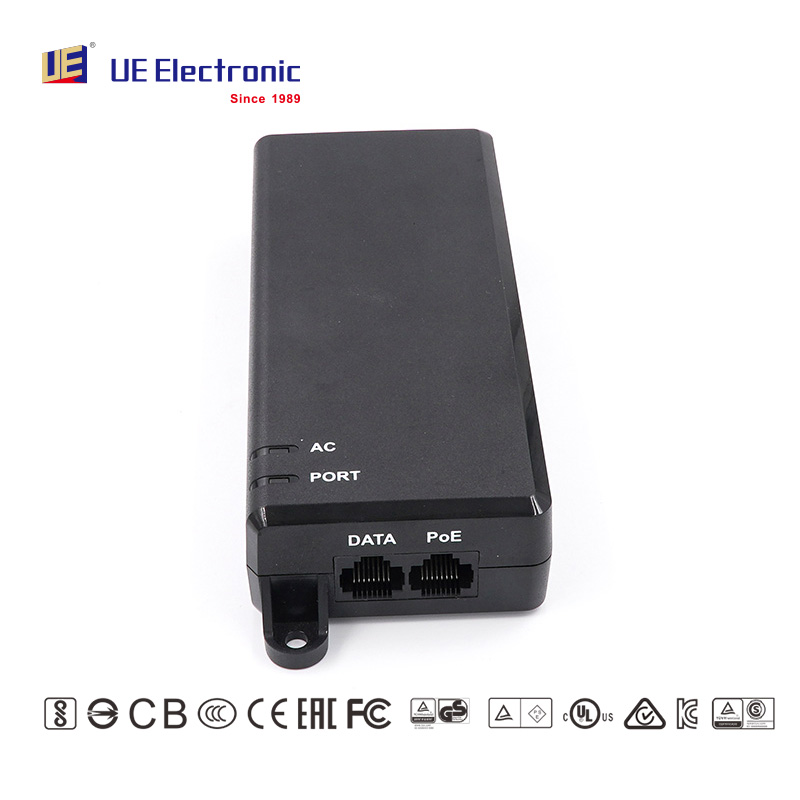
Choosing the wrong Power over Ethernet (PoE) injector carries high stakes for your network infrastructure. You might face unnecessary hardware costs. Worse, you could permanently damage incompatible network equipment. A PoE injector plays a critical role in modern network deployments. It delivers both data and electrical power over a single Ethernet cable directly to a Powered Device (PD). You must match the exact delivery method to your specific endpoint.
We will explore the technical differences between active and passive PoE delivery methods. You will gain a clear comparison of these technologies. This guide helps IT buyers and network engineers match the right hardware to their deployment needs. We break down the negotiation protocols, voltage requirements, and standard compliance rules. By the end, you will know exactly which hardware suits your unique environment.
Key Takeaways
Active PoE features a "handshake" protocol that verifies device compatibility before sending power, preventing hardware damage.
Passive PoE delivers "always-on" continuous voltage without communication, requiring exact voltage matching between injector and endpoint.
Industry standards (IEEE 802.3af/at/bt) apply exclusively to Active PoE, ensuring interoperability across different manufacturers.
Deploying passive injectors is highly cost-effective for specific applications like CPE wireless bridge power, but carries strict implementation risks.
The Core Technical Difference: Power Negotiation vs. Always-On Power
The fundamental divide between PoE delivery methods happens at the exact moment of connection. When evaluating an active vs passive PoE injector, you must understand how they handle initial hardware contact. Active models rely on an intelligent communication phase. Passive models rely on raw, immediate output.
The "Handshake" Mechanism
Active injectors utilize a sophisticated "handshake" protocol. They do not send power blindly down the line. First, they release a harmless, low-voltage test current. They use this current to detect specific resistance signatures. The injector looks for a precise 25k ohm resistance signature from the endpoint. This signature confirms the attached device genuinely requires power. If the injector detects the correct signature, it proceeds to classify the power requirement. Only then does it supply full voltage. This careful negotiation protects sensitive hardware.
Continuous Output (Passive)
Passive injectors take a completely different approach. They skip the handshake phase entirely. A passive injector immediately pushes raw electrical power down the Ethernet cable. It sends a continuous voltage stream the moment you plug it into a power outlet. Most models deliver either 24V or 48V constantly. They offer no communication, no classification, and no safety checks. The power is simply always on.
The Risk Factor
This "always-on" nature introduces significant deployment risks. Imagine plugging a standard, non-PoE laptop into an active injector. The active injector detects no 25k ohm signature. It simply defaults to functioning as a standard data pass-through. Your laptop remains perfectly safe. Now, imagine plugging that same laptop into a passive injector. The passive injector instantly forces 24V or 48V into the laptop's Network Interface Card (NIC). This sudden surge will likely fry the NIC. It can permanently destroy the motherboard. You must exercise extreme caution around passive ports.
Active PoE Injectors: Standardized Safety and Scalability
Active PoE represents the enterprise standard for network deployments. The Institute of Electrical and Electronics Engineers (IEEE) governs this technology. They created strict compliance tiers to guarantee safety across the industry. These standards allow different brands to communicate seamlessly.
IEEE Standards Explained
You must understand the active PoE compliance tiers to manage your power budgets effectively. Each tier supports different device classes. They offer distinct wattage limits.
Digital signage, POS terminals, high-draw building automation.
Universal Compatibility
An active PoE adapter ensures safe deployment across mixed-vendor environments. You can mix Cisco switches, Ubiquiti access points, and Axis cameras on the same network. As long as they all share the same IEEE standard, they will negotiate power flawlessly. This universal compatibility simplifies procurement. It also reduces network downtime during hardware upgrades.
Drawbacks
Active injectors do carry minor disadvantages. They require dedicated negotiation circuitry. This extra hardware increases the per-unit cost compared to basic passive models. They also consume slightly more background power to keep their detection protocols active. However, most enterprise environments gladly accept these trade-offs for guaranteed equipment safety.
Passive PoE Injectors: Specific Use Cases and Legacy Support
Passive PoE remains highly relevant despite the dominance of active standards. Manufacturers design passive injectors by stripping away complex negotiation chips. This creates a remarkably simple power delivery tool.
Why Passive PoE Exists
Removing the negotiation hardware offers massive cost advantages. Manufacturers can produce passive injectors for a fraction of the cost of active ones. They consist primarily of a transformer and basic wiring. This simplicity makes them incredibly cheap to replace. They also generate less internal heat due to fewer active components.
Primary Applications
Network engineers still deploy passive technology in highly specific scenarios. These applications usually involve closed ecosystems or outdoor deployments.
Legacy WISP Equipment: Wireless Internet Service Providers rely heavily on passive hardware. They mount radios on remote towers. Passive injectors provide cheap, reliable power for these setups.
Outdoor Links: Deployments needing CPE wireless bridge power often utilize passive adapters. Point-to-point outdoor radios require simple, uninterrupted voltage.
Proprietary Ecosystems: Certain manufacturers built massive product lines around passive delivery. Older Ubiquiti airMAX devices and MikroTik RouterBOARDs frequently require 24V passive input.
Key Requirements
You face strict operational requirements when deploying these units. Network admins must manually match the voltage. If an endpoint requires 24V, you must use a 24V passive PoE injector. Providing 48V to a 24V endpoint will destroy it. Providing 24V to a 48V endpoint will cause boot loops or erratic behavior. Manual verification is non-negotiable.
Evaluation Framework: Shortlisting the Right Injector
You need a structured approach to select the correct injector. Guessing often leads to burnt network interfaces or failed deployments.
Endpoint Specifications
The golden rule of PoE deployment is simple. Always check the endpoint’s spec sheet first. Do not rely on assumptions. Look closely at the power input requirements.
If the spec sheet lists an 802.3 standard (af/at/bt), choose an Active injector.
If the spec sheet explicitly states "24V Passive" or "48V Passive", choose a Passive injector.
Injector Comparison Chart
Feature Dimension
Active PoE Injector
Passive PoE Injector
Safety Protocols
Handshake negotiation prevents damage.
None. Raw voltage is always present.
Interoperability
High. Works across different brands.
Low. Requires exact voltage matching.
Initial Setup
Plug and play.
Requires manual voltage verification.
Best For
Modern offices, mixed-vendor enterprise.
WISP towers, point-to-point bridges.
Cable Distance and Voltage Drop
You must account for physical cable limitations. Ethernet cables experience natural resistance over long distances. This resistance causes voltage drops. Passive PoE is highly susceptible to this issue. If you run a passive line close to the 100-meter limit, the endpoint might receive insufficient voltage. Active PoE standards account for this degradation. Active injectors output slightly higher voltage at the source. This guarantees the endpoint receives its minimum required power, even at 100 meters.
Future-Proofing vs. Budget Constraints
You must balance upfront savings against long-term scalability. Passive injectors offer immediate budget relief for large-scale outdoor deployments. However, active injectors guarantee device protection. They ensure compliance with future hardware upgrades. Investing in active injectors provides peace of mind. It prevents costly human errors during future network maintenance.
Implementation Risks and Deployment Best Practices
Even seasoned network engineers make mistakes. You can prevent catastrophic hardware failures by implementing strict deployment protocols.
Cross-Plugging Hazards
You invite disaster if you mix hardware carelessly. Several exact scenarios routinely cause permanent damage in server rooms. Plugging a 48V passive injector into a 24V passive endpoint destroys the endpoint instantly. Plugging a passive injector into a standard, non-PoE network switch port can fry the switch's internal components. You must isolate your power equipment.
Labeling and Cable Management
You should establish a rigorous physical tagging protocol. Wiring closets can become chaotic. Prevent accidents by following these exact steps:
Color-Code Cables: Use distinct colored Ethernet cables (like red or yellow) exclusively for passive PoE runs.
Tag the Ports: Place bright warning labels directly on the passive injector ports. Clearly state the voltage (e.g., "DANGER: 24V PASSIVE").
Isolate Equipment: Group passive injectors on a separate rack shelf away from standard active switches.
Update Documentation: Log every passive connection in your network topology maps immediately upon installation.
Gigabit vs. Fast Ethernet
You must verify the port speeds of your injectors before purchasing. Many cheap, older passive injectors only support Fast Ethernet (10/100Mbps). They use two cable pairs for data and two pairs for power. Modern access points, especially Wi-Fi 6 models, require Gigabit speeds. A cheap passive injector will throttle a high-performance AP down to 100Mbps because it lacks Gigabit data pins. Always verify the injector spec sheet explicitly states "10/100/1000 Gigabit" support.
Conclusion
Choosing the correct injector simplifies your infrastructure and protects your investments. You should default to Active PoE for 95% of modern, mixed-vendor enterprise deployments. The IEEE standards guarantee safety, prevent accidental damage, and ensure long-term scalability. The slight increase in hardware cost pales in comparison to the cost of replacing fried equipment.
You should reserve Passive PoE exclusively for isolated, closed-ecosystem applications. They remain the best tool for replacing specific legacy CPE adapters or powering rural WISP towers. Before you finalize your procurement list, take immediate action. Audit your Powered Devices' spec sheets. Verify their exact IEEE compliance or passive voltage requirements. This single step ensures a safe, optimized network deployment.
FAQ
Q: Can an active PoE injector damage a non-PoE device?
A: No. Active injectors rely on a safety handshake protocol. When you connect a non-PoE device, the negotiation fails because the device lacks the required 25k ohm resistance signature. The injector defaults to transmitting data only, keeping your hardware perfectly safe.
Q: Are Ubiquiti and MikroTik devices active or passive?
A: They use both technologies. Older models and specific affordable product lines rely on 24V passive PoE. However, their newer enterprise lines, such as UniFi access points and standard RouterBOARDs, utilize standard active IEEE 802.3af/at delivery methods.
Q: How do I know if my device needs 24V or 48V passive PoE?
A: You must check the physical label printed directly on the device or consult the manufacturer's official datasheet. Never guess the voltage. Supplying 48V to a device built for 24V will cause an immediate overvoltage event, destroying the hardware.
Q: Can I use a passive PoE injector with an active PoE switch?
A: You can, but it is generally redundant. It introduces an unnecessary point of failure. You only need to do this if a specific legacy endpoint strictly requires passive power that your active switch cannot natively provide.
UE Electronic is a power supplier integrating R&D, production and sales. We maintain a leading level in extension cord and GaN charger.We are committed to becoming a global power supplier.