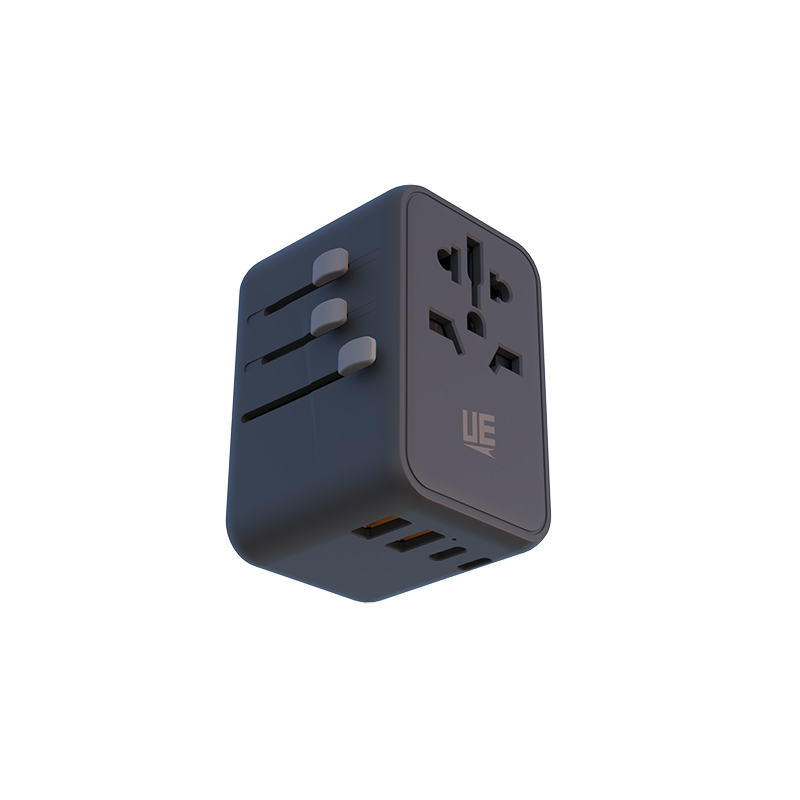
Arriving in a foreign country to find a dead phone and an incompatible plug ruins travel plans instantly. This decision-stage dilemma often begins at home while packing. You must decide whether to invest in a bulky, all-in-one solution. Alternatively, you might manage a loose collection of smaller, destination-specific plugs. Modern travel gear complicates this choice significantly. We have largely shifted away from standard AC pass-through needs. Today, travelers require direct USB charging capabilities for multiple gadgets simultaneously. This guide provides an objective, scenario-based framework to help you navigate these power options. You will learn how to evaluate different adapter types based on your specific itinerary. We aim to help you minimize luggage bulk and maximize utility on the road. Ultimately, you will ensure device safety without wasting money on unnecessary accessories. By understanding your own power demands, you can travel confidently anywhere in the world.
Key Takeaways
Universal travel adapters are ideal for multi-country itineraries, digital nomads, and tech-heavy travelers requiring simultaneous charging.
Regional adapters are best for single-destination trips, minimalists, and ensuring a secure fit in loose or aging hotel wall sockets.
Neither adapter type converts voltage; verifying whether your devices are dual-voltage (100V–240V) is a mandatory safety step before use.
Modern travelers often benefit most from a universal adapter with built-in high-wattage USB-C delivery, eliminating the need for separate charging bricks.
The Core Difference: Universal vs. Regional Design
Understanding the fundamental mechanics of your charging equipment prevents costly travel mistakes. Both categories serve the same ultimate goal. They bridge the physical gap between your home electronics and foreign wall sockets. However, they achieve this through completely different engineering philosophies.
Universal Travel Adapters (The All-in-One Solution)
Engineers design these units to handle multiple international standards in a single chassis. They act as a central hub for global power connectivity.
Mechanism: They feature retractable sliders or interchangeable blocks. These internal mechanisms deploy pins covering the four primary global plug types: US, UK, EU, and AUS.
Common Add-ons: Manufacturers frequently include built-in fuses to protect against sudden power surges. Advanced models offer direct USB-A and USB-C ports alongside traditional AC pass-through capabilities.
A high-quality universal travel adapter simplifies packing for complex itineraries. You do not need to research the exact plug type for every layover. However, you must handle these devices carefully. The internal moving parts require gentle operation to avoid snapping the plastic sliders.
These represent the minimalist approach to international power. They do one specific job and do it reliably.
Mechanism: They consist of fixed-prong, solid-state pieces of plastic. They act as a direct physical bridge between your home plug and a specific foreign outlet. Common examples include Type C or Type F plugs used throughout Europe.
Form Factor: They feature a stripped-down design. They contain no moving parts. They usually lack built-in USB circuitry or surge protection.
Best Practices: Buy these in packs of three or more. You can easily leave them plugged into hotel walls behind beds or desks. Carrying spares prevents a single lost adapter from ruining your trip.
Common Mistakes: Do not assume all European countries use the same regional plug. While Type C works in many places, the UK uses the distinct Type G, and Switzerland uses Type J.
Selecting the best tool requires evaluating your specific travel habits. You must balance physical constraints, device counts, and charging speeds. Review the following dimensions to determine your ideal setup.
Weight, Leverage, and Socket Retention (The "Sag" Factor)
Physical stability is a frequently ignored factor in travel gear. Universal adapters are notoriously top-heavy. They pack complex circuitry and mechanical parts into a small cube. Older infrastructure presents a unique challenge for these blocks. Historic European hotels, vintage train cars, and local cafes often have worn-out wall sockets.
The Risk: When you plug a heavy block into a loose socket, gravity pulls it downward. This sag can break the electrical circuit connection. In worst-case scenarios, the entire unit falls out of the wall.
The Solution: Regional adapters solve this problem effortlessly. They have a significantly lower center of gravity. They provide a tight, flush fit against the wall. If you anticipate staying in aging accommodations, pack a few regional adapters as secure base plates.
Device Load and Simultaneous Charging
Count the devices you need to charge daily. A modern traveler often carries a laptop, smartphone, smartwatch, wireless earbuds, and a power bank. Charging these individually creates a logistical nightmare.
This reality increases the need for a reliable multiple plugs travel adapter. A universal block equipped with three to four USB ports acts as a centralized charging hub. You only need one available wall socket to power your entire tech ecosystem overnight. Conversely, regional adapters restrict you to a strict 1:1 ratio. You get one AC plug per adapter. You must pair them with a separate multi-port charging brick to charge multiple items simultaneously.
Modern Tech Integration vs. Legacy AC Plugs
Travel technology changes rapidly. A decade ago, everyone needed AC pass-through outlets to plug in separate device chargers. Today, USB delivery dominates the market.
The rise of the high-powered USB-C travel adapter changes how we pack. You must assess whether you genuinely need an AC pass-through outlet. Many travelers realize they only charge USB devices. In this case, an adapter outputting 65W or more directly via USB-C is vastly more efficient. It charges laptops and phones directly, completely eliminating the need to carry separate power bricks.
The Safety Reality Check: Adapters vs. Voltage Converters
Electrical safety is non-negotiable. Ignoring voltage rules can destroy your expensive equipment or start a fire. Many travelers confuse adapter functions.
The Most Common Traveler Trap
We must clarify a critical difference. An adapter changes the physical plug shape to fit a foreign wall outlet. It does not alter the electricity flowing through it. A converter changes the actual electrical current (voltage) from a foreign standard down to your home standard. Using an adapter on a device incompatible with foreign voltage results in immediate damage.
Dual-Voltage Devices (Safe)
Fortunately, most modern portable electronics are dual-voltage. Laptop chargers, smartphone blocks, and camera battery chargers typically handle global electricity standards natively. Check the fine print on your device charger. If it reads "Input: 100V–240V 50/60Hz," you are safe. These devices only require a simple adapter to function globally. They automatically adjust to the local current.
High-Draw/Single-Voltage Devices (High Risk)
Grooming tools and medical devices pose the biggest risk. Hair dryers, curling irons, and CPAP machines often rely on single-voltage standards. For instance, plugging a US-standard 110V hair dryer into a 220V European outlet using just an adapter is dangerous. The motor will spin twice as fast, overheat, and catch fire. For these high-draw items, you must buy a dedicated step-down voltage converter. Better yet, purchase dual-voltage travel versions of these specific appliances.
Grounding Considerations
Look at the pins on your adapters. Most slider-style universal adapters are ungrounded. They only feature two metal prongs. This limits their safe use. High-powered appliances and metal-chassis laptops often use three-prong plugs for grounding. Grounding redirects stray voltage safely into the earth, preventing electrical shocks. If your primary device requires a ground pin, ensure you purchase an adapter explicitly rated for grounded connections.
Pros, Cons, and Implementation Risks
Every packing strategy involves trade-offs. Let us break down the advantages and disadvantages of both form factors.
The Case for the Universal Travel Adapter
Pros: They are entirely future-proof. Spontaneous layovers in unexpected countries pose no problem. They offer centralized charging for multiple devices simultaneously. High-end models often include built-in surge protection or easily replaceable fuses.
Cons: They possess a bulky footprint. This size often blocks adjacent wall outlets, angering fellow travelers in airport lounges. The moving slider parts are prone to mechanical failure over time. They also require a higher upfront financial investment.
The Case for Regional Adapters
Pros: They are extremely cheap to replace if lost or broken. Their lightweight, low-profile design fits seamlessly into small pockets. They are highly reliable because they lack moving parts. Their flush design means they rarely fall out of loose or aging sockets.
Cons: Their small size makes them easy to forget in dark hotel rooms. They require you to carry multiple loose pieces for multi-region trips. For example, traveling through the UK, France, and Switzerland requires three completely different plug types.
Adapter Comparison Summary
Feature / Metric
Universal Adapters
Regional Adapters
Socket Retention
Prone to sagging in older, loose sockets due to weight.
Excellent flush fit; highly stable in wall.
Device Load
High (can charge 3-5 devices simultaneously with USB ports).
Low (strict 1:1 ratio unless using external hubs).
Durability
Moderate (moving sliders can snap over time).
High (solid-state plastic, virtually indestructible).
Multi-Country Travel
Excellent (all-in-one readiness).
Poor (requires carrying multiple specific types).
Cost per Unit
Higher initial investment ($25 - $70).
Very low ($5 - $10 for a multi-pack).
Decision Matrix: Shortlisting Your Next Step
Your ideal solution depends entirely on your travel profile. Match your itinerary to the personas below to finalize your packing list.
Profile A: The Single-Destination Vacationer
You are traveling to Paris for a week and returning home. You carry a phone, a tablet, and a camera. You have a fixed itinerary and no plans to cross borders.
Recommendation: Choose the regional adapter. Buy a 3-pack of the specific plug type required for your destination (e.g., Type E/F for France). You can use your existing charging bricks. This keeps your luggage light and guarantees a secure wall connection in older hotels.
Profile B: The Digital Nomad / Backpacking Multi-Country
You are spending three months navigating Southeast Asia, followed by a month in Europe. Your itinerary is fluid. You carry a laptop for remote work, alongside various personal electronics.
Recommendation: Invest in a premium universal adapter. Look for a model featuring Gallium Nitride (GaN) technology. GaN components run cooler and pack higher wattage into smaller spaces. This allows the adapter to safely push enough power to charge a laptop while maintaining a manageable size.
Profile C: The High-Tech Minimalist
You travel frequently but strictly limit your gear. You only carry devices that charge via USB-C. You despise bulky electronics and tangled cables.
Recommendation: Purchase a dedicated global power adapter focused entirely on USB delivery. Skip the AC pass-through feature entirely. Choose a compact unit that serves purely as a direct-to-device fast charger. This eliminates the need to pack your laptop's original heavy power brick.
Conclusion
Choosing between universal and regional power solutions dictates how easily you stay connected abroad. You must weigh the localized reliability of simple regional plugs against the multi-country convenience of complex universal blocks. Neither option is inherently superior; they simply serve different travel styles.
As you prepare for your next departure, follow these final action steps. Prioritize GaN technology if you opt for a universal multi-port model, as it drastically reduces heat and bulk. Always verify safety certifications, ensuring the product bears CE, FCC, or RoHS markings. Most importantly, build a habit of double-checking the voltage input label on your device power bricks before packing them. Taking five minutes to verify your electronics will save you from dangerous electrical failures, allowing you to focus entirely on the journey ahead.
FAQ
Q: Can a universal travel adapter convert voltage for my hair dryer?
A: No. Travel adapters only change the physical pin configuration to fit foreign wall sockets. They do not alter electrical current. Most hair dryers are single-voltage, high-heat appliances. Using them abroad without a heavy-duty, step-down voltage converter will destroy the appliance and create a severe fire hazard.
Q: Are universal adapters allowed in carry-on luggage?
A: Yes. They are completely safe and permitted in carry-on bags. Universal adapters do not contain lithium-ion batteries. Therefore, they comply with TSA and international aviation security guidelines. Keeping them in your carry-on is highly recommended so you can charge devices during airport layovers.
Q: Why does my universal adapter keep falling out of the wall socket?
A: Universal blocks contain dense internal circuitry and sliding mechanisms, making them top-heavy. In older buildings with heavily used, loose sockets, this weight causes them to sag and detach. To fix this, plug a small, lightweight regional adapter into the wall first, then plug your universal block into that.
Q: Do I need a grounded travel adapter?
A: You only need a grounded adapter if your devices have three-prong plugs. This is common for high-powered appliances or metal-chassis laptops. Grounding safely redirects stray electrical currents. Note that most standard, compact universal sliders only support two-prong (ungrounded) connections, so check your device cords before traveling.
UE Electronic is a power supplier integrating R&D, production and sales. We maintain a leading level in extension cord and GaN charger.We are committed to becoming a global power supplier.