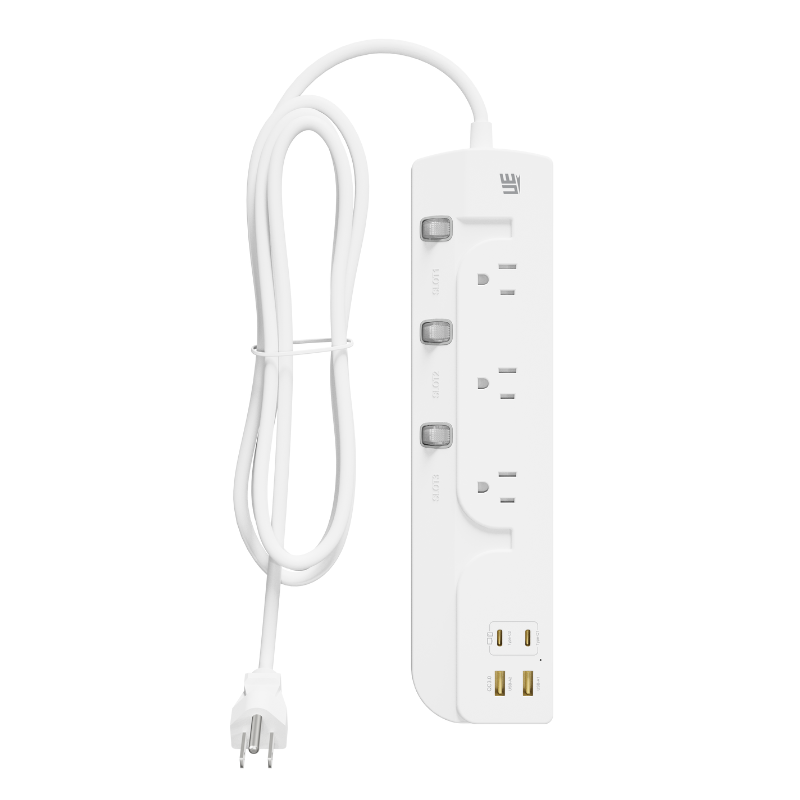
Extension sockets were once designed for one straightforward purpose: providing more AC outlets when a wall socket was not enough. That basic function is still important, but the devices people use every day have changed considerably. Smartphones, tablets, wireless headphones, smartwatches, portable speakers, cameras, and many other electronics are now charged through USB connections rather than traditional AC plugs.
Because of this shift, the modern Extension Socket is no longer simply an electrical accessory with several outlets. It has become a centralized charging station that combines AC power with USB-A and USB-C ports. This design helps users power conventional appliances while also charging mobile devices from the same compact unit.
USB ports are therefore not included only as an extra feature. They reflect a broader change in how households, offices, and commercial spaces use electrical power. Understanding why these ports have become common can help buyers choose products that are more practical, organized, and suitable for current charging habits.
Daily Electronics Have Moved Toward USB Charging
The most obvious reason modern extension sockets include USB ports is that a growing number of electronic devices depend on USB charging. In the past, nearly every device came with a dedicated power adapter. Today, manufacturers often supply only a cable, especially for smartphones, tablets, headphones, and small accessories.
This means users may own many charging cables but not enough wall adapters. A USB-equipped extension socket solves this problem by allowing cables to connect directly to the power unit. There is no need to attach a separate adapter to every AC outlet.
USB-A Remains Useful for Common Devices
USB-A is still widely used in homes and workplaces. Many charging cables, desk accessories, small fans, lamps, Bluetooth speakers, and older mobile devices use a standard USB-A connector. Including USB-A ports helps an extension socket remain compatible with equipment that people already own.
Although newer standards are becoming more popular, USB-A has not disappeared. For many users, a practical extension socket needs to support both older and newer charging formats rather than forcing an immediate switch to one connector type.
USB-C Supports Newer Charging Habits
USB-C has become increasingly common because it is compact, reversible, and capable of carrying more power than many earlier USB formats. It is now used for smartphones, tablets, laptops, handheld game systems, cameras, and other portable electronics.
Adding USB-C ports allows an extension socket to serve a broader range of equipment. A model with sufficient USB-C output may charge not only small mobile devices but also larger products such as compatible notebooks. This makes the extension socket more useful for modern desks, travel setups, and shared charging areas.
Built-In USB Ports Reduce the Need for Separate Adapters
Traditional charging requires three separate components: an AC outlet, a power adapter, and a cable. When several devices need to be charged, the number of adapters quickly increases. These adapters take up space, block neighboring outlets, and create additional clutter around desks, beds, and workstations.
Built-in USB ports remove one of these components from the charging process. Users can connect a cable directly to the extension socket, leaving the AC outlets free for equipment that genuinely requires a plug.
This is especially helpful when large power adapters occupy more than one outlet. A bulky adapter may cover the socket beside it, reducing the usable capacity of a conventional power strip. Direct USB charging avoids this issue and allows the available space to be used more efficiently.
Fewer Chargers Create a Cleaner Setup
A desk with a computer, monitor, phone, headphones, lamp, and tablet can easily become crowded with chargers and cables. The same problem appears beside beds, in meeting rooms, and in hotel rooms. Combining AC outlets and USB ports in one unit creates a cleaner and more controlled power arrangement.
This does not remove every cable, but it reduces the number of separate charging blocks connected to the socket. The result is easier cable management and a more organized environment.
One Power Unit Can Serve Several Device Categories
Modern users rarely charge only one type of device. A household may need power for a television, laptop, smartphone, tablet, router, and smart speaker. An office desk may include a computer, monitor, desk lamp, mobile phone, headset, and portable battery.
An extension socket with both AC and USB connections can support these mixed requirements. The AC outlets remain available for larger equipment, while the USB ports handle portable electronics. Instead of using separate charging stations for different products, users can bring several power needs together in one location.
This Is Useful in Shared Spaces
Shared charging is common in offices, classrooms, meeting rooms, hotel lobbies, airport waiting areas, and family living spaces. People may arrive with different cables and devices, but many of those devices rely on USB charging.
An extension socket with several USB ports can serve multiple users at the same time. One person may charge a phone through USB-C while another uses USB-A for headphones or a power bank. At the same time, the AC outlets can continue powering a laptop adapter, projector, or other equipment.
USB Ports Help Preserve AC Outlet Capacity
The number printed on an extension socket does not always reflect how many outlets can be used comfortably. Large adapters may interfere with neighboring sockets, and several small chargers can occupy all available outlets even though they supply only low-power devices.
When USB ports are built into the extension socket, these small devices no longer need individual AC adapters. The main outlets can then be reserved for appliances, computers, displays, printers, or other products that cannot be powered directly through USB.
This is one reason a compact socket with USB ports may be more practical than a larger model with only AC outlets. Usable capacity matters more than outlet count alone.
Fast-Charging Technology Has Increased Their Value
Early USB ports on extension sockets often provided limited charging power. They were suitable for basic phones and small electronics, but they could be slow when used with larger batteries. Modern USB charging technology has improved considerably.
Many current products support higher USB-C output and intelligent charging protocols. These systems can identify the requirements of a connected device and provide an appropriate level of power within the product’s rated limits.
USB Power Delivery Expands Possible Applications
USB Power Delivery, commonly known as USB PD, allows compatible devices to receive higher levels of power through a USB-C connection. Depending on the extension socket’s design and total output, this can support faster phone charging, tablet charging, and even certain laptops.
For users who regularly work with USB-C devices, this can reduce dependence on multiple dedicated chargers. However, buyers should still check the rated output of each port and the total shared power before purchasing. The presence of a USB-C connector does not automatically mean that every laptop or fast-charging mode is supported.
GaN Technology Supports Compact High-Power Designs
Some modern extension sockets use gallium nitride, or GaN, power components. GaN technology can improve power conversion efficiency and help manufacturers design smaller charging systems with higher output capability.
For users, this can mean a more compact product that combines multiple AC outlets with higher-powered USB charging. It also supports the development of extension sockets that fit neatly on desks or in limited spaces without requiring a large external charging block.
Modern Workspaces Need More Flexible Power Access
Remote work, mobile work, and hybrid office arrangements have changed how people use power. A fixed desktop computer is no longer the only device on a workstation. Many users switch between laptops, tablets, smartphones, wireless keyboards, headsets, and other rechargeable accessories.
A USB-equipped extension socket makes this environment easier to manage. It can remain in one place while supporting a changing mix of devices throughout the day. A user may charge a laptop in the morning, connect a phone later, and power a desk accessory in the afternoon without rearranging several adapters.
This flexibility is also useful in meeting rooms, where visitors may need temporary access to power. Providing both AC outlets and USB connections reduces the chance that someone cannot charge a device because the correct adapter is unavailable.
USB Ports Make Extension Sockets More Travel-Friendly
Travelers often carry several electronic devices but have access to only one or two wall outlets in hotels, temporary offices, or rented accommodation. Carrying individual adapters for every device increases luggage weight and makes packing more complicated.
A compact extension socket with USB ports can act as a central travel charging station. One wall connection can support multiple devices, helping travelers charge phones, tablets, cameras, watches, and laptops in the same area.
Regional plug compatibility is still essential. UK, EU, US, and other socket standards differ, so users need a product designed for the destination market. Voltage ratings, plug type, cable specification, and safety certification should also be checked before use.
Convenience Must Be Supported by Safe Design
Adding USB ports increases convenience, but it also makes the internal design of an extension socket more complex. The product must manage AC power, convert power for USB charging, control heat, and distribute output among connected devices.
For this reason, buyers should look beyond the number of ports. A reliable product should include suitable protection against overcurrent, overvoltage, overheating, short circuits, and overload conditions. Flame-retardant housing materials, secure internal connections, and properly rated cables are also important.
Total Output Matters When Several Ports Are Used
USB power is often shared across several ports. A socket advertised with a particular maximum output may provide that level only when one port is in use. When multiple devices are connected, the available power may be divided among them.
This does not necessarily indicate a problem. Shared output is common in multi-port charging products. Users simply need to understand how the power is distributed. Clear product specifications should explain the output available from individual ports and from different port combinations.
USB Ports Reflect How Extension Sockets Are Evolving
The addition of USB ports shows that extension sockets are changing from simple outlet expanders into integrated power management products. The goal is not only to increase the number of connections but also to make those connections more relevant to current electronics.
USB-A maintains compatibility with widely used cables and accessories, while USB-C supports newer devices and higher charging power. Together, they help users reduce adapters, preserve AC outlets, organize cables, and charge several categories of equipment from one location.
As charging standards continue to develop, extension socket designs are likely to place greater emphasis on USB-C output, intelligent power allocation, compact structures, and safety protection. However, the best product is not always the one with the largest number of ports. Buyers should consider the devices they use, the required charging power, the regional socket standard, and the number of AC outlets needed.
For businesses and brands looking for extension socket solutions that combine AC outlets, USB-A, USB-C, GaN charging, and regional plug configurations,UE Electronic provides product development and manufacturing support for different application and market requirements. By matching interface design, power output, safety features, and socket standards to actual user needs, the company helps customers develop practical charging products for homes, offices, travel, retail, and other everyday environments.
UE Electronic is a power supplier integrating R&D, production and sales. We maintain a leading level in extension cord and GaN charger.We are committed to becoming a global power supplier.